How to make AI text undetectable: what is actually possible
Short answer
No method makes AI text undetectable: in Weber-Wulff and colleagues' 2023 study of 14 detectors, machine-paraphrased AI text was still correctly identified in 26 percent of cases, and detector makers have trained on paraphrased text since. Editing and paraphrasing lower readings on a given date, at a cost in meaning, and a reading can change when the detector updates.
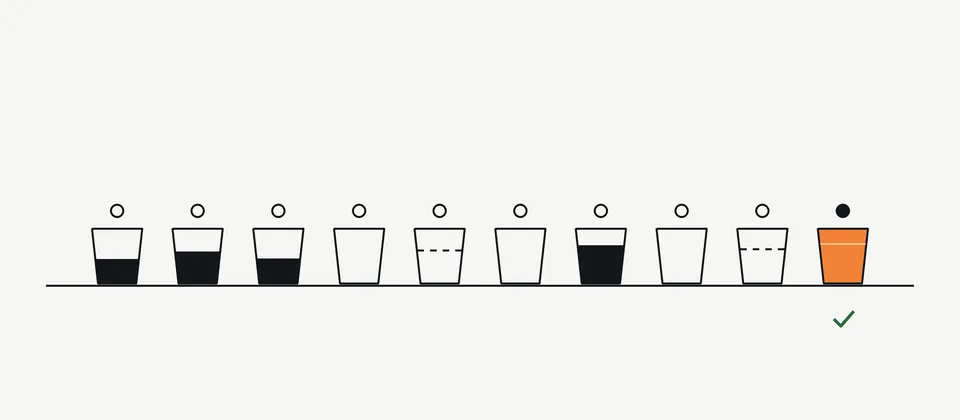
No method makes AI text undetectable: in Weber-Wulff and colleagues' 2023 study of 14 detectors, machine-paraphrased AI text was still correctly identified in 26 percent of cases. That is the honest answer to "how to make AI text undetectable", and the rest of this guide explains why the number is not zero, what the studies did measure, and what it cost. If you came for a trick, there is none here. If you came to understand what detectors read and what moves them, read on.
Check your institution's AI policy before using any writing tool. A humanizer does not make undisclosed AI use acceptable, and this site does not help anyone misrepresent authorship. Where AI use is allowed, disclose it: the MLA and APA both publish rules for citing generative AI, and a one-line disclosure costs nothing.
Why can no method make AI text undetectable?
Three reasons, each from a primary source.
Detectors are many and they disagree. Weber-Wulff and colleagues ran 54 documents through 12 public tools plus Turnitin and PlagiarismCheck and found the probability of a false positive ranged from 0 percent for Turnitin to 50 percent for GPTZero on the same human-written texts (Weber-Wulff et al. 2023, International Journal for Educational Integrity, read 9 November 2026). A text that passes one detector has told you nothing about the next.
Detectors move. OpenAI listed, as a limitation of its own classifier in January 2023, that "AI-written text can be edited to evade the classifier" and that classifiers "can be updated and retrained based on successful attacks", adding that "it is unclear whether detection has an advantage in the long-term" (OpenAI, new AI classifier, read 9 November 2026). Three years later, Turnitin states its indicator covers text "modified by AI paraphraser or bypasser (also called humanizers) tools" (Turnitin, AI writing detection FAQ, read 9 November 2026). Whatever worked against a 2023 model is training data for a 2026 one.
The limit runs both ways. Sadasivan and colleagues derived a bound tying the best possible detector's performance to how far apart human and AI text distributions sit (Sadasivan et al. 2023, arXiv 2303.11156, read 9 November 2026). As models write more like people, detection gets harder; as paraphrasers rewrite more, text drifts from what the writer meant. Neither side reaches zero.
| Claim you will see | What the sources say | Read |
|---|---|---|
| "Works on every detector" | 14 detectors disagreed on the same 54 documents in 2023; false positive rates spanned 0 to 50 percent | 9 November 2026 |
| "Passes Turnitin" | Turnitin's detector is not available to the public; Turnitin states it detects bypasser output | 9 November 2026 |
| "Permanently safe" | OpenAI stated in 2023 that classifiers retrain on successful attacks | 9 November 2026 |
| "No change to meaning" | Krishna and colleagues judged semantics by automatic measures; no editor read the output | 9 November 2026 |
What do AI detectors read?
A detector does not know who wrote a text. It scores properties of the text and reports a probability. Three properties account for most of what the published detectors describe.
| Property | How a detector uses it | Who says so |
|---|---|---|
| Word predictability | Low surprise in word choice reads as machine; Liang and colleagues tied low perplexity to false positives on non-native writing | Liang et al. 2023, read 9 November 2026 |
| Sentence classification | A trained model scores each sentence, then aggregates; Turnitin labels sentences over a threshold AI and reports the share | Turnitin FAQ, read 9 November 2026 |
| Structural sameness | Little variation, literal repetition, paraphrase without new ideas; Turnitin names these as false positive causes | Turnitin FAQ, read 9 November 2026 |
The guide on what AI detectors measure goes through each in depth. The short version: anything that makes word choice less predictable, structure less even and content more specific moves a reading. Those are also the things a careful human editor does to any draft, which is why the honest version of this topic is a guide to humanizing AI text by editing it well.
What did the studies measure when AI text was paraphrased?
Two 2023 studies did the measuring that every humanizer vendor now cites, usually without the caveats.
| Study | What was done to the text | Effect on detection | Cost reported |
|---|---|---|---|
| Krishna et al. 2023 | Paraphrased by DIPPER, an 11 billion parameter model with control over lexical diversity and reordering | DetectGPT fell from 70.3 to 4.6 percent at a 1 percent false positive rate; watermarking, GPTZero and OpenAI's classifier also evaded | Semantics judged "not appreciably" changed by automatic measures |
| Sadasivan et al. 2023 | Recursive paraphrasing of passages around 300 tokens | Detection rates significantly reduced across watermark, neural, zero-shot and retrieval detectors | Text quality "only slightly" degraded "in many cases" |
| Weber-Wulff et al. 2023 | One pass through a paraphraser on its default settings; separately, hand edits with synonyms and reordering | Detectors right 26 percent of the time on paraphrased text and 42 percent on hand-edited text, against 74 percent unmodified | Differences documented in an appendix; not scored |
Krishna and colleagues also proposed the defence: an API provider stores what it generates and matches paraphrases back to the source, which in their test caught 80 to 97 percent of paraphrased generations at a 1 percent false positive rate (Krishna et al. 2023, arXiv 2303.13408, read 9 November 2026). That is one more reason the word "undetectable" does not hold: the detection method can change shape entirely.
What does lowering a detector reading cost?
Nobody in the 2023 literature had an editor read paraphrased output against its input and count what was lost. "Only slightly" and "not appreciably" are model-side judgments. The damage, when it happens, takes three forms: a dropped qualifier that widens a claim, a swapped term that changes it, and a merged sentence that no longer parses. Stronger modes do more of all three.
This is why the published method on this site gives meaning kept 35 points and errors added 20, more than the 30 for detector pass rate. A rewrite that reads as human and says something else has failed, whatever the detector shows.
No detector score should be the only evidence in a misconduct case. The same standard applies to anyone trying to lower one: a reading is not a fact about authorship, in either direction.
What should you do instead?
Four things, in order. Read the AI policy that applies to you. Where AI use is allowed, disclose it in the form your style guide asks for. Edit the text yourself for facts, structure and word choice, which changes the same signals a tool changes and keeps your meaning. Then, if you want a tool for a second pass, choose one on the fields in the guide to whether AI humanizers work: meaning kept, errors added, detector readings on a stated date, and plan limits.
The guides hub holds the rest of this series. None of it will make text undetectable, because nothing does; all of it will tell you what a given change does to a given detector on a given date, which is the most any honest page can offer.
Sources
Questions about this guide
Can AI text be made completely undetectable?
No: detectors differ, update without notice and publish their own error rates, so a text that one detector labels human on one day can be flagged by another detector or by the same one after an update; the 2023 studies lowered readings, never to zero across tools.
What lowers an AI detector's reading the most?
Paraphrasing, according to the published studies: Weber-Wulff and colleagues found 14 detectors were right only 26 percent of the time on machine-paraphrased AI text in 2023, against 74 percent on unmodified AI text, and Krishna and colleagues cut one detector from 70.3 to 4.6 percent.
Do AI detectors catch humanized text now?
Vendors say they train for it: Turnitin states its indicator covers text modified by AI paraphrasers or bypassers, and GPTZero describes a Paraphraser Shield, both read on 9 November 2026; no independent study this site could cite has reproduced either claim.
Why do detectors flag human writing?
Because they score surface statistics, not authorship: Liang and colleagues reported in 2023 that seven detectors flagged 61.22 percent of essays by non-native English writers, and OpenAI's own retired classifier mislabelled human text 9 percent of the time.
Is it against the rules to make AI text undetectable for school?
If your institution restricts AI use, disguising it is misconduct whatever tool you use; read the policy first, disclose AI use where it is allowed, and remember that a humanizer does not make undisclosed AI use acceptable.
What is the honest alternative?
Use AI where your policy allows it, disclose it in the form your style guide asks for, and edit the text yourself for facts and structure so it says what you mean; the guide on humanizing AI text on this site lists the edits.
Related reading
 How to humanize AI text for free, step by stepHow to humanize AI text for free with three tiers that need no card: Clever AI Humanizer, QuillBot and.
 How to judge humanized text quality: the editors' reading rubricHow to judge humanized text quality the way this site's editors do: a 1 to 5 meaning scale, errors per 100.
 How do AI detectors work? What they measure and what they missHow do AI detectors work? The four methods in a 2024 survey, what perplexity means, how GPTZero and Turnitin.
 How to humanize AI textHow to humanize AI text so it holds up: the edits that change what detectors measure, what a 2023 study of 14.
 How we test AI humanizersThe full humanizer test: 24 AI inputs and 6 human controls, five named detectors, a meaning rubric, published.