How do AI detectors work? What they measure and what they miss
Short answer
AI detectors work by scoring text statistics, not authorship, through 4 methods: watermarks planted at generation time, statistical tests such as perplexity, trained classifiers that score sentences, and human-assisted checks, per Wu and colleagues' 2024 survey. GPTZero and Turnitin both describe sentence-level classifiers; Kirchenbauer and colleagues' 2023 watermark detects a hidden pattern in word choice.
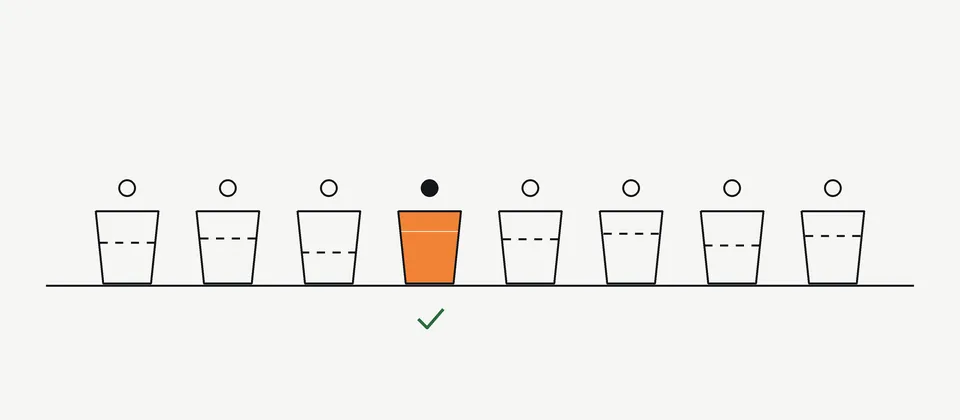
AI detectors work by scoring text statistics, not authorship: the four methods in Wu and colleagues' survey are watermarks, statistics-based detectors, trained neural classifiers and human-assisted checks. Every commercial detector this site uses is one of those or a mix, and every reading it returns is a probability from a model, on a date, about a text's surface. This guide answers "how do AI detectors work" method by method, with what each vendor publishes about its own, and explains why the same text gets different answers from different tools.
How do AI detectors work? The four methods
Wu and colleagues' survey of detection research sorts the field into watermarking, statistics-based detectors, neural-network detectors and human-assisted methods, and notes the shared problems of out-of-distribution text, deliberate attacks and the lack of a common evaluation framework (Wu et al. 2024, A survey on LLM-generated text detection, arXiv 2310.14724, read 9 November 2026).
| Method | What it measures | Needs access to the generating model? | Example |
|---|---|---|---|
| Watermarking | Whether word choices follow a hidden rule planted at generation time | Yes, at generation; detection needs the key | Kirchenbauer et al. 2023; Google's SynthID Text |
| Statistics-based | How probable the text is under a language model: perplexity, probability curvature | A scoring model, not the generator | DetectGPT (Mitchell et al. 2023) |
| Trained classifier | A model fine-tuned on human and AI text pairs scores new text | No; needs training data | OpenAI's retired classifier, GPTZero, Turnitin, Pangram |
| Human-assisted | People spotting tells, sometimes with tool support | No | Wikipedia's "Signs of AI writing" and editors |
The commercial detectors in this site's published method, GPTZero, Originality.ai, Copyleaks, Pangram and ZeroGPT, are trained classifiers, some with statistical features alongside. Watermarks only apply when the generating model planted one, and the writer rarely knows whether it did.
What do statistical detectors measure?
The core idea is predictability. A language model assigns a probability to each next word; text a model would have written scores high, and the summary statistic, perplexity, is low. Liang and colleagues showed what that measures in practice: the TOEFL essays all seven detectors in their study flagged as AI had significantly lower perplexity than the rest, and prompting a chatbot to enrich the vocabulary raised the perplexity and cut the average false positive rate from 61.22 percent to 11.77 percent (Liang et al. 2023, Patterns, read 9 November 2026). They warned against "using low perplexity as an indicator of AI-generated text", because limited vocabulary is also low perplexity.
DetectGPT refined the statistic. Mitchell and colleagues observed that text sampled from a model tends to sit in regions of negative curvature of the model's log probability function, so perturbing a passage and comparing scores separates model text from human text without any training data; on news articles from a 20 billion parameter model it raised detection from 0.81 to 0.95 AUROC against the strongest zero-shot baseline (Mitchell et al. 2023, DetectGPT, arXiv 2301.11305, read 9 November 2026). That is the detector Krishna and colleagues then cut from 70.3 to 4.6 percent with a paraphraser the same year.
| Statistic | What it captures | Where it fails |
|---|---|---|
| Perplexity | How expected each word is to a scoring model | Plain human prose, non-native writing, predictable text such as lists |
| Variation in predictability across sentences | Whether some sentences surprise and others do not | Formulaic human writing with little variation |
| Probability curvature (DetectGPT) | Whether small edits lower the text's probability | Paraphrased text; a different generating model |
How do trained classifiers work?
A classifier is a language model fine-tuned to tell two piles apart. OpenAI described its 2023 classifier as "a language model fine-tuned on a dataset of pairs of human-written text and AI-written text on the same topic", with the threshold set to keep false positives low, and retired it in July 2023 at 26 percent true positives and 9 percent false positives (OpenAI, new AI classifier announcement, read 9 November 2026).
The current vendors describe the same shape with more parts. GPTZero states that it uses "an end-to-end deep learning approach" trained on web, education and AI-generated text, a sentence-by-sentence classifier that gives a probability and confidence per sentence, and a "Paraphraser Shield" against paraphrasing and homoglyph attacks, with confidence categories tuned so the average error rate is under 1 percent for high-confidence predictions (GPTZero, technology, read 9 November 2026). Turnitin states that its model is built on the transformer architecture, trained on its in-house corpus of academic data, that sentences over a threshold are labelled AI, that the document score is the share of prose sentences above the threshold, and that it does not display scores below 20 percent (Turnitin, AI writing detection FAQ, read 9 November 2026). Pangram Labs describes a transformer classifier trained with "hard negative mining with synthetic mirrors" to drive down false positives on high-data domains such as reviews (Emi and Spero 2024, arXiv 2402.14873, read 9 November 2026).
| Vendor | Unit scored | What the headline number is | Stated threshold or band | Read |
|---|---|---|---|---|
| GPTZero | Sentence, rolled up to document | Probability of AI, with uncertain, moderately confident or highly confident | Under 1 percent average error for high confidence, internal set | 9 November 2026 |
| Turnitin | Prose sentence | Share of qualifying sentences above threshold | Scores under 20 percent not shown; 300-word minimum | 9 November 2026 |
| OpenAI (retired) | Document | Label from very unlikely to likely AI | Threshold set to keep false positives low | 9 November 2026 |
| Pangram | Document | Probability of AI | Reported on its own benchmark of 10 domains | 9 November 2026 |
Three things follow. A classifier knows only what it was trained on, so new models and new genres are blind spots. A threshold is a vendor's choice, so the same text can be "AI" at one company and "human" at another. And the percentage is not a share of the text a person wrote; Turnitin says so in as many words.
How do AI text watermarks work?
A watermark is the one method that does not read the text's statistics after the fact; it plants a pattern at generation time. Kirchenbauer and colleagues' method selects a randomised set of "green" tokens before each word is generated and softly promotes them during sampling, so that a detector holding the key can run a statistical test with interpretable p-values on a short span of text, with what the authors call negligible impact on text quality (Kirchenbauer et al. 2023, A watermark for large language models, arXiv 2301.10226, read 9 November 2026). Google has deployed a text watermark under the SynthID name.
The catch is coverage and durability. A watermark only exists if the generating model applied one, and Krishna and colleagues reported in 2023 that paraphrasing evaded a watermarking scheme along with the other detectors they tested, while Sadasivan and colleagues showed recursive paraphrasing weakening watermark detection too. The guide on AI text watermarks covers where watermarks are deployed and what survives a rewrite.
Why do detectors give different answers to the same text?
Because they measure different things with different models and cut at different points. One scores perplexity against its own model; another classifies sentences with a network trained on its own corpus; a third looks for a watermark that may not exist. Weber-Wulff and colleagues saw the result in 2023: 14 tools on the same 54 documents, with false positive rates from 0 to 50 percent and no tool above 80 percent accuracy. The guide on whether AI detectors work sets those figures beside the vendors' current claims.
That disagreement is why this site's method records each of five detectors' own label, on the run date, rather than a single pass or fail, and checks every input before humanizing so the change a tool makes is visible against a baseline. No detector score should be the only evidence in a misconduct case. The guides hub holds the rest of the series, including what to do if you are the one flagged.
Sources
Questions about this guide
How do AI detectors work in simple terms?
They measure how machine-like a text's statistics are: how predictable each word is, how sentences pattern, and, where a watermark exists, whether word choices follow a hidden rule; a trained model then turns those measurements into a probability, and the detector reports it.
What is perplexity in AI detection?
Perplexity is how surprised a language model is by each word; low perplexity means the text is what a model would have written, and Liang and colleagues showed in 2023 that human essays by non-native writers also score low, which is why they were flagged 61.22 percent of the time.
What does an AI detector's percentage actually mean?
It depends on the vendor: Turnitin's percentage is the share of prose sentences scored above its threshold, GPTZero reports a probability with a confidence band, and OpenAI's retired classifier reported a label; none is a measure of how much text a person wrote.
How do AI text watermarks work?
A watermark is planted at generation time: Kirchenbauer and colleagues' 2023 method selects a randomised set of green tokens before each word and softly favours them, so a detector with the key can run a statistical test on any short span of text; the text has to come from a model that applied the mark.
Why do two AI detectors disagree about the same text?
Different methods, training sets and thresholds: one scores perplexity, another classifies sentences with its own model, and each sets its own cut-off, so Weber-Wulff and colleagues found 14 tools disagreeing on the same 54 documents in 2023.
Can AI detectors detect paraphrased or humanized text?
Vendors say they train for it, with Turnitin naming paraphrasers and bypassers and GPTZero describing a Paraphraser Shield, both read on 9 November 2026; the 2023 studies found paraphrasing cut detection sharply, and no independent study has measured the current models.
Related reading
 Falsely accused of using AI? What to do, step by stepFalsely accused of using AI? The evidence to gather, drafts, version history and notes, what Turnitin and.
 What is an AI humanizer?What is an AI humanizer? A plain definition, how it differs from a paraphraser or grammar checker, what the.
 How we test AI humanizersThe full humanizer test: 24 AI inputs and 6 human controls, five named detectors, a meaning rubric, published.
 AI text watermarks: how they work and what survives a rewriteAn AI text watermark is a statistical pattern hidden in word choice. How green-token marking works, which.
 Do AI detectors work?Do AI detectors work? What a 2023 test of 14 tools found, what OpenAI, Turnitin, GPTZero and Pangram publish.