How do professors check for AI? Detectors, drafts and vivas
Short answer
Professors check for AI in five ways, as described by six universities and two detector makers read on 9 November 2026: a detector report such as Turnitin, the document version history, a check of every citation, a comparison with earlier work, and a conversation about the argument. Stanford and Toronto state they do not use detectors at all.
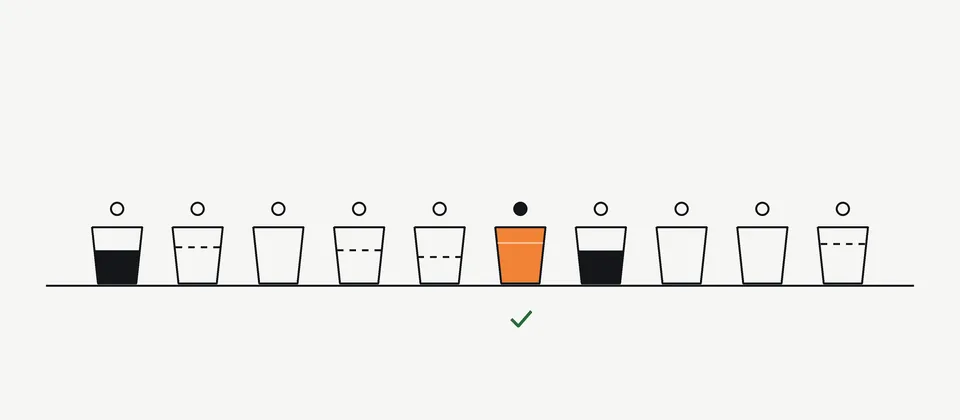
Professors check for AI in five ways, according to six university policies and two detector makers read on 9 November 2026: a detector report, version history, citation checks, comparison with earlier work, and a conversation. The answer to "how do professors check for AI" is therefore mostly not software. Turnitin's indicator is the best known tool, but Stanford and Toronto state they do not use detectors, and Cornell's teaching centre lists four kinds of evidence that count, none of which is a score.
Check your institution's AI policy before using any writing tool. A humanizer does not make undisclosed AI use acceptable, and this site does not help anyone misrepresent authorship. If your course permits AI assistance, MLA and APA both publish disclosure formats, and that disclosure comes before any tool.
How do professors check for AI, method by method?
Each method below is taken from a published university page or a detector maker's own documentation, with the date it was read. None of them is a guess about what happens behind a closed office door.
| Method | What the professor looks at | Who describes it, read 9 November 2026 |
|---|---|---|
| Detector report | A percentage and highlighted sentences from a licensed tool, visible to instructors only | Turnitin, AI writing detection FAQ; University of Sydney, academic integrity page |
| Version history | Whether the document grew over days or appeared complete in one paste | GPTZero, educators page (edit history); Cornell, work inconsistent with "outlines, drafts, or prior discussions" |
| Citation check | Whether every cited source exists and says what the essay claims | Cornell: "citations or references to content that does not exist or cannot be verified"; Stanford: fabricated citations "may prompt a review" |
| Comparison with earlier work | Whether the voice, level and method match the student's other submissions | Cornell: "advanced references, methods, or approaches that exceed the scope of the course"; GPTZero: "patterns across several assignments" |
| Conversation | Whether the student can explain, expand on and defend the work aloud | Stanford: instructors "may ask students to explain and elaborate"; UCL: "an investigatory viva"; Toronto: meeting the student "to discuss their work in person" |
The order matters. In every policy that describes a process, the detector report is at most a starting point and the conversation is where a case is decided. Cornell's teaching centre puts it plainly: instructors should use initial impressions "as a starting point for deeper inquiry, supported by objective and verifiable evidence" (Cornell Center for Teaching Innovation, AI and academic integrity, updated for Fall 2026, read 9 November 2026).
What does a Turnitin AI report show a professor?
Turnitin is licensed to institutions, not to individuals, so a student never sees the report unless an instructor downloads and shares it. Turnitin states that its model scores each prose sentence between 0 and 1, labels sentences above a threshold as likely AI, and reports the share of such sentences as the document percentage (Turnitin, AI writing detection FAQ, read 9 November 2026).
| What the professor sees | Turnitin's statement, read 9 November 2026 |
|---|---|
| A percentage | The share of evaluated prose sentences above the threshold, not the share of the whole file; lists, headings, references, tables and code are removed first |
| Nothing under 20 percent | Scores from 1 to 19 percent are not displayed; an asterisk appears instead, to limit false positives |
| Nothing under 300 words | Documents with fewer than 300 words of evaluated prose are not processed |
| Highlighted sentences | Sentences the model labelled likely AI-generated or AI-modified, including text from paraphrasing or humanizer tools |
| No verdict | The indicator "does not make a determination of misconduct" and "should not be used as the sole basis for action" |
Turnitin also states that it holds its false positive rate "under 1% for documents with over 20% of AI writing" and that it accepts missing some AI text to do so, read 9 November 2026. The full mechanism, including the October 2026 model update, is on Turnitin AI detection explained. Turnitin's detector is not available to the public, so this site relies on Turnitin's published statements and peer-reviewed studies and reports no Turnitin result for any tool.
Can professors tell if you used ChatGPT without a detector?
Often, yes, and several universities say that is the method they prefer. Stanford's policy guidance adopted on 15 October 2026 states that "AI detection tools are not currently used at Stanford" and that instructors may ask students to explain their work in class, sections and labs (Stanford Office of Community Standards, generative AI policy guidance, read 9 November 2026). Toronto states that it "does not support the use of AI-detection software programs on student work" because they "are known to incorrectly flag instances of AI use in human-written content", and recommends meeting the student and using short in-person assessments instead (University of Toronto, generative AI FAQs, updated October 2026, read 9 November 2026).
Cornell's teaching centre lists the evidence it considers tangible, and the list is a fair description of what gives a paper away to a reader who knows the student.
| Evidence Cornell names | Why it shows | Read |
|---|---|---|
| Citations to sources that do not exist or cannot be verified | Language models produce plausible but fictitious references | 9 November 2026 |
| Methods or references beyond the scope of the course | The work exceeds what the course taught without external help | 9 November 2026 |
| The student cannot verbally explain, expand on or defend the work | Understanding cannot be pasted in | 9 November 2026 |
| Work inconsistent with outlines, drafts or office-hours discussions | The process on record does not lead to the submitted text | 9 November 2026 |
Cornell adds a standard of proof: an allegation must be "clear and convincing", which it describes as above "more likely than not" and below "beyond a reasonable doubt", and it states that "AI detection scores are not necessary as evidence of academic misconduct", read 9 November 2026. Columbia's provost policy says detection "should be treated as a guideline and not a grading metric" (Columbia University, generative AI policy, read 9 November 2026).
How accurate are the detectors professors use?
Two kinds of number exist: what the vendors state and what independent studies found, and they are measured on different texts. Turnitin states under 1 percent false positives above the 20 percent band. GPTZero states it keeps its false positive rate "at no more than 1%" and describes a sentence-by-sentence classifier with a "Paraphraser Shield" against paraphrasing and homoglyph attacks (GPTZero, technology, read 9 November 2026).
Weber-Wulff and colleagues tested 14 detectors on 54 documents in 2023 and found no tool above 80 percent accuracy; human-written text was classified correctly 96 percent of the time, AI text with light manual edits only 42 percent and machine-paraphrased AI text 26 percent (Weber-Wulff et al. 2023, International Journal for Educational Integrity, read 9 November 2026). Liang and colleagues found seven detectors flagged 61.22 percent of 91 human-written TOEFL essays as AI in 2023 (Liang et al. 2023, Patterns, read 9 November 2026). Both studies tested 2023 models; the vendor figures are current claims on the vendors' own test sets. The guide on whether AI detectors work sets the two side by side.
No detector score should be the only evidence in a misconduct case. GPTZero, which sells a detector to schools, tells educators to ask students to show their process through edit history or in-person assessment and to look at patterns across several assignments rather than act on one scan (GPTZero, for educators, read 9 November 2026).
What happens after a professor suspects AI?
A process, not a verdict. Toronto states that when an instructor believes a student used an unpermitted tool, the instructor "should meet with the student as the first step" under its Code of Behaviour on Academic Matters, read 9 November 2026. Sydney states that a Turnitin AI score "would not be the only evidence relied upon" and is "considered alongside other relevant evidence" (University of Sydney, artificial intelligence and academic integrity, last updated 3 November 2026, read 9 November 2026). UCL states that a suspected student "would be likely to be invited to an investigatory viva to probe the authorship of your work" (UCL, engaging with AI in your education and assessment, read 9 November 2026).
For a student, the practical consequence is to keep what those processes ask for: drafts, notes, version history and the sources themselves. Sydney's own advice to students who are permitted to use AI is to keep copies of the outputs as evidence of the research and writing process. What to say and bring to that meeting is the subject of what to do if you are flagged for AI, and the rest of this series sits in the guides hub.
Sources
- Cornell Center for Teaching Innovation, AI and academic integrity
- Turnitin, AI writing detection FAQ
- Stanford Office of Community Standards, generative AI policy guidance
- University of Toronto, generative AI FAQs
- Columbia University, generative AI policy
- GPTZero, technology
- Weber-Wulff et al. 2023, International Journal for Educational Integrity
- Liang et al. 2023, Patterns
- GPTZero, for educators
- University of Sydney, artificial intelligence and academic integrity
- UCL, engaging with AI in your education and assessment
Questions about this guide
How do professors check for AI?
With a detector report where the institution licenses one, plus version history, citation checks, comparison with earlier work and an oral conversation; Cornell's teaching centre lists the last four as the evidence that counts and states a score is not necessary, read on 9 November 2026.
Can professors tell if you used ChatGPT?
Not from a score alone: Turnitin states its indicator does not make a determination of misconduct, and Stanford and Toronto state they do not use AI detectors, so what tells a professor is usually a citation that does not exist, a draft history that jumps from nothing to finished, or a student who cannot explain their own paragraph, read on 9 November 2026.
What does a Turnitin AI score show a professor?
The percentage of qualifying prose sentences that Turnitin's model labelled likely AI, with sentences highlighted, shown only to instructors and only when the document has at least 300 words of prose and scores 20 percent or more, read on 9 November 2026.
How accurate are the AI detectors professors use?
Turnitin states a false positive rate under 1 percent on documents over 20 percent AI and GPTZero states no more than 1 percent, read on 9 November 2026, while Weber-Wulff and colleagues found no detector above 80 percent accuracy across 54 documents in 2023 and Liang and colleagues found seven detectors flagged 61.22 percent of human TOEFL essays.
Do colleges detect AI in every assignment?
No: Turnitin processes a submission for AI only when the institution has the feature enabled, read on 9 November 2026, and Stanford, Toronto and Cornell's teaching centre state in writing that they do not use or do not recommend detection software.
What should I do if a professor thinks I used AI?
Bring your drafts, notes, version history and sources, and be ready to talk through the argument; Cornell states that an allegation must meet a clear and convincing standard built from several kinds of evidence, and Toronto states the first step is a meeting with the instructor, read on 9 November 2026.
Related reading
 How to choose an AI humanizer: a 10-question checklistHow to choose an AI humanizer in 10 questions: request cap, monthly pool, free allowance, modes, privacy.
 How to cancel an Undetectable AI subscriptionHow to cancel Undetectable AI subscription: the email route in the vendor's help centre, the 4 details it.
 How does Turnitin detect AI? The indicator explainedHow does Turnitin detect AI? Sentence scores from 0 to 1, a 20 percent display floor, a 300-word minimum, its.
 Do AI detectors work?Do AI detectors work? What a 2023 test of 14 tools found, what OpenAI, Turnitin, GPTZero and Pangram publish.
 Falsely accused of using AI? What to do, step by stepFalsely accused of using AI? The evidence to gather, drafts, version history and notes, what Turnitin and.