How to choose an AI humanizer: a 10-question checklist
Short answer
Ask 10 questions before paying for an AI humanizer, and 7 of them are answered on the vendor's own pricing and privacy pages: request cap, monthly pool, billing toggle, free allowance, named modes, retention and training terms, and refund window. The other 3 are about your text. No vendor page answers whether the rewrite kept your meaning.
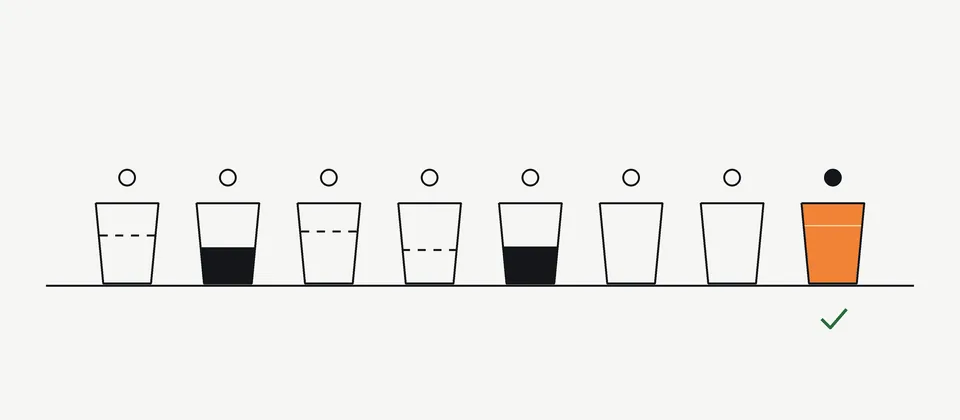
Ten questions decide how to choose an AI humanizer, and 7 of them are answered on the vendor's own pricing and privacy pages before you type a card number. The other 3 are about your text and only you can answer them. This guide is the checklist behind every "Choose X if" line on the full humanizer ranking and on the published method, set out so you can run it on any tool, including ones this site has not reviewed. Every price and limit below carries the date it was read.
How to choose an AI humanizer: what are the 10 questions?
Work down the table in order. The first seven can be settled in ten minutes on the vendor's pages; the last three need the free allowance and a passage of your own.
| Number | Question | Where the answer is | Why it decides anything |
|---|---|---|---|
| 1 | How many words does one request accept on the plan I would buy? | Pricing page, plan card or FAQ | Every split is a join where a defined term can change; entry-plan caps run from 80 words (BypassGPT free) to 5,000 (Phrasly), read 8 and 9 November 2026 |
| 2 | How many words a month does the plan allow, and is it metered in words, requests, prompts or coins? | Pricing page | A request meter charges the same for 100 words as for 600; a prompt or coin meter cannot be converted to words from the page |
| 3 | Is the headline price a monthly charge or a yearly charge shown per month? | The billing toggle on the pricing page | Undetectable AI's $5.00 card is a $60.00 charge; its monthly toggle is $9.99, read 9 November 2026 |
| 4 | What can I run for free, and does it need an account or a card? | Pricing page and homepage | Clever AI Humanizer: 3,000 words a request, no account; QuillBot: 125 words per input; Walter Writes AI: 300 words once, no card; all checked on 8 November 2026 |
| 5 | Does the vendor name its modes, and does any mode let me ask for a lighter rewrite? | Tool interface or pricing page | A light mode is the one that risks your meaning least; Walter Writes AI names Simple, Standard and Enhanced, Phrasly names Balanced, Strong and Max, read 8 and 9 November 2026 |
| 6 | What does the privacy page say about keeping my text and training on it? | Privacy policy, not the marketing page | WriteHuman states there is no opt-out from training; GPTHuman offers one; nine of twelve pages read on 9 November 2026 say nothing either way |
| 7 | What is the refund window, in days and in words used, and how do I cancel? | Refund policy or terms page | HIX Bypass allows 3 days and 1,500 words; StealthGPT's terms state all purchases are non-refundable, read 9 November 2026 |
| 8 | Does the output keep every claim, qualifier and number in my input? | Your own read, line by line | No vendor publishes a meaning-retention figure; the method on this site weights it 35 of 100 |
| 9 | How many errors did the rewrite add per 100 words? | Your own count | Merged clauses and wrong-word swaps are the common ones; weighted 20 of 100 under the method |
| 10 | Does the vendor's page make a promise the studies say nobody can keep? | The homepage headline | Weber-Wulff and colleagues found paraphrased AI text still identified 26 percent of the time by 14 detectors in 2023; any "every detector" claim is unsupported |
The order is deliberate. Questions 1 to 3 decide whether a plan fits your documents and your budget. Questions 4 to 7 decide what you risk by trying it. Questions 8 to 10 decide whether the tool works for you, and no page answers them.
Why does the request cap come before the price?
Because the cap decides how many pieces your document becomes, and the pieces are where humanizers do their quiet damage. A 2,000-word report on a 750-word cap is three requests; each is rewritten without sight of the others, so a term defined in piece one can come back as a synonym in piece three. The price per word is the same either way, which is why price sits at question 3 and the cap at question 1.
| Your typical document | Cap that fits it in one request | Entry plans that state such a cap, read 8 and 9 November 2026 |
|---|---|---|
| A 300-word email or paragraph | 300 words or more | Nearly all; BypassGPT's free plan (80 words) and Stealthly's free plan (80 words) do not |
| A 700-word blog section | 750 words or more | Walter Writes AI Starter (750), StealthGPT Pro (1,000), GPTHuman Starter (1,000) and larger caps |
| A 2,000-word essay | 2,000 words or more | HIX Bypass Standard (3,000), Rewritify Basic (3,000), Clever AI Humanizer (3,000, free), Phrasly Unlimited (5,000), StealthWriter paid plans (5,000) |
| A 6,000-word report | 6,000 words or more | No entry plan on this site states a cap that large; Undetectable AI states no cap on its pricing page |
Caps are the vendors' own figures from their pricing pages. The complete list of caps, free and paid, is on the humanizer word limits guide, and the arithmetic on what each plan costs per 10,000 words is in AI humanizer pricing compared.
Which answers should stop you from buying?
Three answers end the conversation whatever the price. A privacy page that says your text trains the model with no opt-out, if the text is confidential: WriteHuman's privacy notice states "There is no setting to opt out of this use", read 9 November 2026. A refund term that is a detector bet rather than a window, if you want the right to change your mind: StealthGPT's terms of service state that "All purchases are non-refundable" alongside a separate detector-tied policy (StealthGPT, terms of service, read 9 November 2026). And a homepage that promises a result on every detector, because no study supports it.
On that last point the evidence is specific. Weber-Wulff and colleagues ran 14 detectors over AI text that had been machine paraphrased and found the detectors still identified it correctly 26 percent of the time, the lowest rate in their study but not zero (Weber-Wulff et al. 2023, International Journal for Educational Integrity, read 9 November 2026). Turnitin, for its part, lists "text that has been paraphrased without developing new ideas" among the patterns that can produce a false positive (Turnitin, AI writing detection FAQ, read 9 November 2026). A vendor claiming a clean result on every detector is claiming something the detector makers and the researchers both say is not how detection works. The patterns to watch for are set out in AI humanizer red flags.
How do you answer questions 8 to 10 without paying?
Use the free allowance on a passage you wrote or know well, 300 to 500 words, with at least one number, one qualifier and one technical term in it. Run it once on the default mode. Then do three things.
| Check | How | What a fail looks like |
|---|---|---|
| Meaning | Read output against input, sentence by sentence, with the original on the left | "In most trials" became "in trials"; "statistically significant" became "important"; a cause the input only implied is now asserted |
| Errors | Count grammar faults, wrong words and broken sentences, then divide by the word count and multiply by 100 | Two or more per 100 words on a clean input |
| Detector readings | Run the output through two detectors you do not pay the vendor for, and note the date | A pass on the vendor's own checker and a flag on an outside one |
That is a smaller version of what the published method does with 24 inputs, 6 human controls and 5 named detectors, and it is enough to rule a tool out. It is not enough to rule one in, because detector models change without notice and a reading is true for its date. No detector score should be the only evidence in a misconduct case, and no single pass should be the only reason to pay for a year.
What does the subscription law add to the checklist?
Question 7 has a legal floor in the United States. The FTC announced a final "click-to-cancel" rule on 16 October 2024 requiring sellers to disclose material terms before taking billing details, obtain express informed consent to recurring charges, and provide a cancellation mechanism as simple as the sign-up (FTC press release, 16 October 2024, read 9 November 2026). The rule has since been revised to conform to court decisions and is the subject of a 2026 notice seeking comment on new amendments, so the 2024 text is not the text in force; what it tells a buyer is which cancellation routes meet the agency's stated standard and which run through a support inbox. The vendor-by-vendor terms are in AI humanizer refund policies.
Outside the United States, statutory rights differ by country and are not covered here. Wherever you are, the practical rule is the same: put the renewal date in a calendar the day you pay, because every vendor this site has read says cancellation takes effect at the end of the paid term.
Which humanizer should you choose, then?
The checklist gives you a shortlist, not a winner. If your documents are under 750 words and you want a strength setting, the shortlist is one shape; if you paste 3,000-word chapters, it is another; if your text is confidential, two tools fall off it before price is discussed. The ranking on bestaihumanizer.ai applies the same ten questions to every tool on the same fields, and each review carries a critical main limitation rather than a recommendation. Price is reported there and never scored. The guides hub holds the pages that go deeper on each question, each with the date its figures were read.
Sources
Questions about this guide
What should I look for in an AI humanizer?
Seven things on the vendor's pages before you pay: words per request, words per month, whether the headline price is a yearly charge, the free allowance, named modes, what the privacy page says about keeping and training on your text, and the refund window; then read the output against the input yourself.
Is a free AI humanizer good enough?
For short texts, often: Clever AI Humanizer takes 3,000 words a request free with no account and QuillBot 125 words per input, checked on 8 November 2026, so the question is whether the free cap fits your document, not whether free is worse.
Does a higher price mean a better humanizer?
Nothing published supports that: the monthly entry prices on this site run from $4.99 to $29.99 and the vendors publish no meaning-retention figures at any price, read 9 November 2026, so price buys allowance and caps, not a measured result.
Should I pick a humanizer by its detector pass rate?
Not by the vendor's own figure, which is unaudited on every page this site has read; Weber-Wulff and colleagues found in 2023 that machine-paraphrased AI text was still identified by 14 detectors 26 percent of the time, and detectors have updated since.
How do I check an AI humanizer before paying for a year?
Use the free allowance or paid trial on a 400-word passage you know well, run the output through two detectors you do not pay the vendor for, and read it against the input line by line for dropped qualifiers and changed terms before the renewal date passes.
What is the most important question when choosing a humanizer?
Whether the words-per-request cap fits your typical document in one piece, because every split is a join where terms and register drift; caps on entry plans run from 80 words at BypassGPT to 5,000 at Phrasly, read 8 and 9 November 2026.
Related reading
 How to humanize AI text manually: a 20-edit checklistHow to humanize AI text manually: a 20-edit checklist tied to what detectors read, the five strongest AI.
 How to disclose AI use in writing: MLA, APA and policy wordingHow to disclose AI use in writing: the MLA and APA rules read and dated, what Oxford, Cambridge and Harvard.
 Best AI humanizer: 12 tools, one published methodBest AI humanizer by one published protocol: meaning kept, errors added, detector readings and plan limits.
 How we test AI humanizersThe full humanizer test: 24 AI inputs and 6 human controls, five named detectors, a meaning rubric, published.
 AI humanizer word limits: every tool's free and paid cap per requestAI humanizer word limit per request for 27 tools, free and paid, from 80 words to 5,000, each read on the.