Humanize translated text? Why machine translation gets flagged as AI
Short answer
Machine translation alone cost detectors 20 percentage points of accuracy in Weber-Wulff and colleagues' 2023 study: 96 percent on human-written English, about 76 percent on human writing translated by DeepL or Google Translate. The translated text was human. A humanizer rewrites it again and changes its meaning; drafts and the original-language text defend it better.
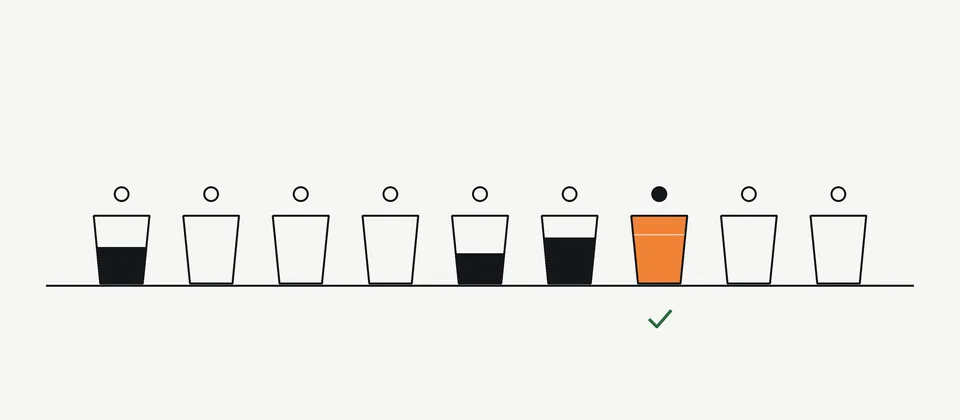
Machine translation alone cost AI detectors 20 percentage points of accuracy in Weber-Wulff and colleagues' 2023 study, on text that was entirely human-written. That is the fact behind the search "humanize translated text": people translate their own work into English, run it through a detector, and watch it come back flagged. The text was theirs. The translation made it look machine-made, because it is machine-made at the level a detector reads. This page explains the finding, why it happens, why a second rewrite is the wrong fix for your own writing, and what the tools state about other languages.
Check your institution's AI policy before using any writing tool. A humanizer does not make undisclosed AI use acceptable, and this site does not help anyone misrepresent authorship.
Why does machine translation get flagged as AI?
Because a translation engine is a language model, and its output has the regularity detectors look for. Weber-Wulff and colleagues built a test set of 54 documents for 14 detection tools in 2023, and one category, which they called 02-MT, was human writing in Bosnian, Czech, German, Latvian, Slovak, Spanish and Swedish, about 10,000 characters each, translated into English with DeepL in 3 cases and Google Translate in 6 (Weber-Wulff et al. 2023, International Journal for Educational Integrity, read 9 November 2026). None of the source texts had ever been online.
The detectors classified the hand-written English documents correctly 96 percent of the time. On the translated documents, accuracy "dropped by 20%", and the authors wrote that "apparently, machine translation leaves some traces of AI in the output, even if the original was purely human-written". Six of the fourteen tools produced false positives at all, and the paper says the risk rose "dramatically" for machine-translated texts; for GPTZero, half of its positive classifications on human and translated documents would have been false accusations.
| Document class in Weber-Wulff et al. 2023 | How it was made | Average detector accuracy | Read |
|---|---|---|---|
| Human-written English | Written by the researchers, never online | 96 percent | 9 November 2026 |
| Human-written, machine-translated to English | Written in 7 languages, translated by DeepL or Google Translate | About 76 percent, a 20-point drop | 9 November 2026 |
| AI-generated, unmodified | Generated by a chatbot from recorded prompts | 74 percent | 9 November 2026 |
| AI-generated, then paraphrased by a tool | Rewritten by a paraphraser on its default setting | 26 percent | 9 November 2026 |
The authors drew the conclusion that matters here in their discussion: using machine translation "can lead to a higher number of false positives, leaving L2 students (and researchers) at risk of being falsely accused of unauthorised content generation when using machine translation to translate their own texts". A translated text sits closer to the AI class than to the human one, and the writer did nothing but translate.
Is translated text flagged for the same reason as non-native English?
Yes, and the mechanism is the same one. Detectors score perplexity, how predictable each word is given the words before it. Liang and colleagues ran seven detectors over 91 human-written TOEFL essays in 2023 and found an average false positive rate of 61.22 percent, with the essays every detector flagged showing significantly lower perplexity than the rest (Liang et al. 2023, Patterns, read 9 November 2026). A second-language writer uses a smaller, more expected vocabulary; so does a translation engine choosing the most probable English rendering of each phrase.
The same paper shows what moves the reading. When the authors prompted a chatbot to enrich the vocabulary of the TOEFL essays, the false positive rate fell from 61.22 to 11.77 percent. That is the operation a humanizer performs, and it is also the operation that changes what a text says, because the enriched word is not always the one the writer meant. The non-native English page covers the writer's side of this; translation is the same problem with a machine in the middle.
| Cause of a false flag | Study | Figure | What it shows |
|---|---|---|---|
| Second-language vocabulary | Liang et al. 2023 | 61.22 percent of TOEFL essays flagged | Predictable word choice reads as machine output |
| Vocabulary enrichment by a chatbot | Liang et al. 2023 | False positives fell to 11.77 percent | Rarer words move the reading; the paper measured no meaning change |
| Machine translation of human writing | Weber-Wulff et al. 2023 | Accuracy fell 20 points from 96 percent | The translation engine's regularity reads as AI |
| Tool paraphrase of AI text | Weber-Wulff et al. 2023 | Accuracy fell to 26 percent | A rewriter moves readings furthest, on text that was AI to begin with |
Should you humanize translated text?
Not if the text is yours, and the reason is evidence. A translated document that gets flagged has a defence a detector cannot see: the original-language file, its edit history, the translation tool's name and the date. A humanizer run over the translation removes that chain, because the submitted text no longer matches the translation, and it adds the risk every rewrite carries, a changed qualifier, a swapped term, a dropped clause. The rubric this site uses lists twelve of those faults, and the meaning score it feeds carries 35 of 100 points on the method page.
Weber-Wulff and colleagues' own conclusion was procedural rather than technical: detection reports "cannot be used as the only basis for reporting students", and a student accused on a detector score alone "would have no possibility for a defence" because the tools provide no evidence. The writer who keeps the source text has the defence the paper says is missing. The false positives guide sets out what to ask for and what to show.
| Situation | What helps | What does not help |
|---|---|---|
| You translated your own essay and it was flagged | The original-language draft, edit history, the translation tool and date | A humanizer pass, which breaks the match between draft and submission |
| You are about to submit a machine translation | Reading it against the original and fixing the stiff phrases by hand | A strong humanizer mode that swaps discipline terms |
| The course permits AI editing with disclosure | A light pass, read line by line, plus the disclosure the style guide asks for | An undisclosed pass |
| The text is AI-generated and then translated | Settling whether the AI draft was allowed | Any rewrite; the question is the draft, not the detector |
Which humanizers work in other languages?
Three vendors state a list and most state none. Grammarly's AI Humanizer page says the tool works in "English, Spanish, French, German, Portuguese, and Italian" (Grammarly, AI Humanizer, read 9 November 2026). HIX Bypass's pricing page lists "50+ Languages Supported" as a feature of every plan without naming them (HIX Bypass, pricing, read 9 November 2026). Netus AI's pages state 36 languages across its Bypasser, Paraphraser and Summarizer, read 9 November 2026. Clever AI Humanizer, Phrasly, StealthGPT, Undetectable AI, Walter Writes AI, WriteHuman, GPTHuman, QuillBot and BypassGPT state no language list on the pages checked on 8 and 9 November 2026.
A language list says the tool accepts the input. It says nothing about what the rewrite does to a text in that language, and no vendor publishes a per-language result. The languages page lists the tools by stated language support for readers who write in something other than English and want a rewrite in that language rather than a translation.
The published method's first run uses an English-only input set, so the translation question is answered on this page from the two studies rather than from a run; the method's six human-written control texts report each detector's false positive rate on the same genres, which is the figure a translated writer needs when a flag arrives. No detector score should be the only evidence in a misconduct case, and a translated text is the case where that line matters most. The rest of this series is in the guides hub.
Sources
Questions about this guide
Why is my translated text flagged as AI?
Because machine translation produces regular, predictable English: Weber-Wulff and colleagues found in 2023 that detector accuracy on human writing translated by DeepL or Google Translate was 20 points lower than on English written by hand, and six of their fourteen tools produced false positives that rose sharply on translated texts.
Should I humanize translated text to avoid AI detection?
Not if the text is your own: a humanizer rewrites the translation a second time and can change what it says, while the original-language draft and your translation history are evidence a detector cannot see and a reader can, and Weber-Wulff's paper names translated work by second-language students as the case most exposed to false accusation.
Does a humanizer work in languages other than English?
Some state a list: Grammarly's humanizer names English, Spanish, French, German, Portuguese and Italian, HIX Bypass's pricing page lists 50 or more languages, and Netus AI names 36, all read 9 November 2026; Clever AI Humanizer, Phrasly and StealthGPT state none.
Is translated text the same as non-native English to a detector?
They fail for the same reason: Liang and colleagues found in 2023 that seven detectors flagged 61.22 percent of human TOEFL essays and that the flagged essays had lower perplexity, meaning a more predictable vocabulary, and machine translation produces the same regularity.
What should I keep if I translate my own work?
The original-language file with its edit history, the translation tool's name and date, and any notes, because an institution checking a flag can read those and a detector cannot, and the false positives guide on this site lists the steps.
What will the published method measure about translation?
The first run's input set is English-only, so translation is reported from the studies on this page; the method's six human-written control texts show each detector's false positive behaviour on the same genres, which is the figure a translated writer needs.
Related reading
 Best AI humanizer extension: six Chrome listings compared on what they read, cost and changeBest AI humanizer extension for Chrome: six vendor listings read 9 November 2026, compared on where they run.
 AI humanizer API: who publishes one, at what price and limitsWhich AI humanizer API to use: vendors that publish one, entry prices from $19 to $49 a month, words.
 AI humanizer for non-native English speakersAI humanizer for non native english speakers: why detectors flag ESL writing, what Liang 2023 measured, and.
 How we test AI humanizersThe full humanizer test: 24 AI inputs and 6 human controls, five named detectors, a meaning rubric, published.
 AI detector false positives: who gets flagged and whyAI detector false positives explained: the rates Turnitin, GPTZero and OpenAI publish, the 61 percent figure.