AI detectors and TOEFL essays: why non-native writers get flagged
Short answer
Seven AI detectors flagged 61.22 percent of 91 human-written TOEFL essays as AI in Liang and colleagues' 2023 study, while the real TOEFL and IELTS writing sections are typed live and scored by examiners, so a humanizer has no place in either exam. The risk is a practice essay flagged by a tutor's detector; the fix is vocabulary, not disguise.
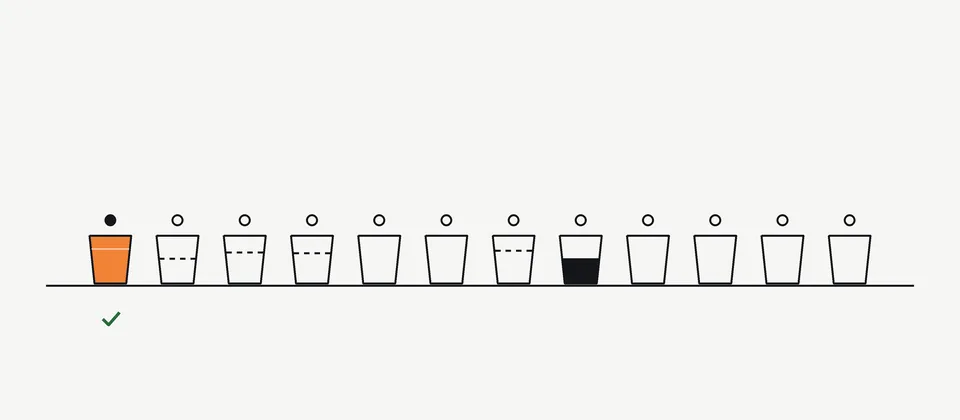
Seven AI detectors flagged 61.22 percent of 91 human-written TOEFL essays as AI in Liang and colleagues' 2023 study, the number behind every search for "AI detector TOEFL essays". The second fact matters as much: the real TOEFL and IELTS writing sections are typed live and scored by examiners, so no humanizer can touch an exam response and no detector is described on either exam's scoring page. The problem is practice essays run through a tutor's or a platform's detector, and the people it hits hardest are the writers the exams exist for.
Check your institution's AI policy before using any writing tool. A humanizer does not make undisclosed AI use acceptable, and this site does not help anyone misrepresent authorship. Where a course or preparation programme permits AI assistance, MLA and APA both publish disclosure formats, and that disclosure comes before any tool.
AI detector TOEFL essays: why do non-native writers get flagged?
Liang and colleagues ran 91 TOEFL essays from a Chinese educational forum and 88 essays by US eighth-grade students, all written by people, through seven widely used detectors. The detectors were near-perfect on the US essays and flagged an average of 61.22 percent of the TOEFL essays as AI; 89 of the 91 TOEFL essays were flagged by at least one detector (Liang et al. 2023, Patterns, read 9 November 2026).
| Measure in Liang and colleagues' study | Result | Read |
|---|---|---|
| Detectors tested | 7 | 9 November 2026 |
| Human-written TOEFL essays flagged as AI, average across detectors | 61.22 percent of 91 | 9 November 2026 |
| TOEFL essays flagged by at least one detector | 89 of 91 | 9 November 2026 |
| Human-written US eighth-grade essays flagged | Near zero | 9 November 2026 |
| TOEFL essays flagged after a chatbot enriched their vocabulary | 11.77 percent, average | 9 November 2026 |
| US essays flagged after a chatbot simplified their vocabulary | Rose sharply | 9 November 2026 |
The authors' explanation is perplexity. Detectors of that generation scored how predictable each next word was, and a writer working in a second language with a smaller active vocabulary produces more predictable text. When the researchers asked a chatbot to enrich the TOEFL essays' word choice, the average false positive rate fell from 61.22 to 11.77 percent, and when they asked it to simplify the US essays, those essays started to be flagged. The detectors were measuring vocabulary range, not authorship. The false positives guide covers the other groups this affects.
Does the TOEFL or IELTS exam run an AI detector on your essay?
Neither exam's published scoring page mentions one, and the way the sections are delivered leaves nothing for a detector to do. The TOEFL iBT writing section has three task types, Build a Sentence, Write an Email and Write for an Academic Discussion, responses are typed on a keyboard during the test, and ETS states that TOEFL tests "are only scored by a centralized scoring team, never at the test center" (ETS, TOEFL iBT writing section and understanding TOEFL scores, read 9 November 2026). IELTS states that examiners score Writing on four criteria: task achievement or task response, coherence and cohesion, lexical resource, and grammatical range and accuracy (IELTS, scoring in detail, read 9 November 2026).
| Exam | How the writing is produced | Who scores it | Stated criteria | AI detector on the scoring page, read 9 November 2026 |
|---|---|---|---|---|
| TOEFL iBT | Typed live during the test, three task types | A centralized ETS scoring team | Clear and effective communication, organization, grammar and vocabulary; scores reported on a 1 to 6 scale since 21 January 2026 | None mentioned |
| IELTS Academic and General Training | Written live, Task 1 and Task 2, on paper or on computer | Certified examiners | Task achievement or response, coherence and cohesion, lexical resource, grammatical range and accuracy | None mentioned |
A humanizer therefore has no role in either exam. The text is produced in front of the test, in the time allowed, and the scoring criteria are the writer's own lexical resource and grammatical accuracy. Anything a humanizer could rewrite is produced after the exam is over.
Should you use an AI humanizer on IELTS or TOEFL practice essays?
No, and the reason is in the exam criteria and in Liang's experiment. A practice essay exists to train the vocabulary and grammar the examiner will score. A humanizer replaces that vocabulary and grammar with its own, so the writer practises sentences they did not produce and will not produce under exam conditions. Liang's enrichment result points the other way: the detector problem shrank when the writer's own range of words grew, which is also the skill IELTS calls lexical resource.
| Route for a flagged practice essay | What changes in the text | What it does for the exam | What it does to the detector reading |
|---|---|---|---|
| Rewrite with a humanizer | Word choice, sentence rhythm, often meaning and register | Nothing; the exam response is written live | Unknown per tool; this site's published method records detector readings per tool per run |
| Expand your own vocabulary and vary sentence length | Word choice and structure, in your own hand | Raises the scored criteria directly | In Liang's study, enriched vocabulary cut the average false positive rate to 11.77 percent |
| Ask the tutor or platform to drop the detector | Nothing in the text | Nothing | Removes the misreading rather than the writing |
The peer-reviewed studies measured detector readings, not whether a reader would find the same claims in a rewritten text, which is why the method on this site weights meaning kept at 35 of 100 points and detector readings at 30. A rewrite that moves a detector score while changing what the essay argues has cost the writer twice.
What should a non-native writer do if a practice essay is flagged?
Treat the flag as a statistic about word choice on one day, not as a finding about who wrote the essay. Ask which detector produced it and on what date, keep the draft history, and point to the published record. GPTZero itself states that its "efforts in reducing ESL bias in classification since April 2022 have reduced AI detection's false positive rate on TOEFL texts to 1.1%", which is a vendor's admission that the problem was real as well as a claim about the fix (GPTZero, technology, read 9 November 2026). Turnitin states that its training set includes "second-language learners" to reduce bias, and that its percentage "should not be used as the sole basis for action" (Turnitin, AI writing detection FAQ, read 9 November 2026). Both are the vendors' figures on the vendors' own test sets.
No detector score should be the only evidence in a misconduct case. For a language learner the practical defence is the one the exams already demand: write in your own words, keep every draft, and let the vocabulary grow where the examiner can see it. The tools non-native writers ask about, with their limits and dates, are listed on the non-native English page; the school-rules version is on the students page; and the rest of this series sits in the guides hub.
Sources
Questions about this guide
Why do AI detectors flag TOEFL essays?
Because detectors score how predictable the word choices are, and Liang and colleagues found in 2023 that the human TOEFL essays flagged by seven detectors had lower perplexity, meaning a smaller, more expected vocabulary, than the US student essays that passed.
Does TOEFL use an AI detector on the writing section?
The TOEFL writing pages read on 9 November 2026 describe responses typed on a keyboard during the test and scored only by a centralized scoring team, and mention no AI detector; the section is written live, so there is nothing for a detector or a humanizer to act on.
Does IELTS writing get checked by an AI detector?
The IELTS scoring page read on 9 November 2026 states that examiners score Writing against task achievement or response, coherence and cohesion, lexical resource, and grammatical range and accuracy, and mentions no AI detector.
Should I use an AI humanizer on my IELTS or TOEFL practice essays?
No: the exam scores your own vocabulary and grammar under time pressure, a humanizer rewrites both so you practise someone else's sentences, and Liang's enrichment experiment shows the detector problem shrinks when the writer's own vocabulary grows.
What should I do if a practice essay is flagged as AI?
Keep the draft history, ask which detector was used, and point to the published false positive evidence: Liang's 61.22 percent on TOEFL essays and GPTZero's own statement that it had to reduce its TOEFL false positive rate to 1.1 percent, read on 9 November 2026.
Which detector is least likely to flag a non-native English writer?
No independent figure settles that; GPTZero states a 1.1 percent false positive rate on TOEFL texts after de-biasing and Turnitin states its training set includes second-language learners, both read on 9 November 2026, and both are the vendors' own claims on their own test sets.
Related reading
 AI humanizer for Microsoft Word: one documented integration, paste for the restAI humanizer for Microsoft Word: Grammarly documents a Word integration, read 9 November 2026, every other.
 AI writing tools as accommodations: assistive technology, detectors and humanizersAI writing tools accommodations: what one university accessibility office says about AI as assistive.
 AI detector false positives: who gets flagged and whyAI detector false positives explained: the rates Turnitin, GPTZero and OpenAI publish, the 61 percent figure.
 How we test AI humanizersThe full humanizer test: 24 AI inputs and 6 human controls, five named detectors, a meaning rubric, published.
 AI humanizer for non-native English speakersAI humanizer for non native english speakers: why detectors flag ESL writing, what Liang 2023 measured, and.