WriteHuman vs GPTHuman
GPTHuman takes the longer request: 1,000 words per output on its Starter plan against 600 words per request on WriteHuman's Basic plan, both read on 9 November 2026. WriteHuman vs GPTHuman is a comparison between two mid-priced humanizers that count usage in opposite units: WriteHuman sells requests, GPTHuman sells words. That one difference decides most of the table below. Each tool has a review on the same fields, the WriteHuman review and the GPTHuman review, and every head-to-head on this site is listed in the compare hub.
Updated
Side by side
The same fields for both tools, taken from each vendor's own pages on the date stated.
| Field |  WriteHuman |  GPTHuman |
|---|---|---|
| Verdict | The only tool in the ranking priced per request rather than per word, with two quality tiers and 2 to 5 output variations per request | A three-step word-metered ladder with stated per-output caps, no named modes, and a price page that shows a dollar sign without a currency code |
| Best for | Writers who rewrite a predictable number of 400 to 600 word pieces a month and want more than one output to pick from | Writers who want 25,000 words a month at a yearly rate under $9 and can work in pieces of 1,000 words or less |
| Main limitation | A 100-word fix spends a full request, the same as a 600-word rewrite, and the free plan's 3 requests at 250 words cover one short page a month | The free trial is 300 words of output in total, and the page states no currency for a company with a Montreal address |
| Free tier | 3 requests a month, 250 words each, Basic quality, checked on 9 November 2026 | 300 words of output once, 300 words per output, checked on 9 November 2026 |
| Cheapest paid plan | Basic, $20 a month, or $12 a month billed yearly as $144, 80 requests a month, 600 words per request, checked on 9 November 2026 | Starter, $15.00 a month, or $8.25 a month billed yearly as $99.00, 25,000 words a month, checked on 9 November 2026 |
| Per-request limit | 250 free, 600 on Basic, 1,200 on Pro, 3,000 on Ultra | 300 free, 1,000 on Starter, 1,500 on Plus, 2,500 on Unlimited |
| Monthly allowance | 3, 80, 200 or unlimited requests | 300 once, then 25,000, 60,000 or unlimited words, the last subject to the vendor's abuse guardrails |
| Modes | Basic and Enhanced quality tiers; 2, 3 or 5 output variations per request | None named; Shield Guard layer on paid plans |
| Built-in detector | Yes, 160, 400 or unlimited checks a month on paid plans | Yes, limited use on the free trial |
| API | Yes, priced per word and sold separately; MCP access on Pro and Ultra | Yes, listed as the AI Humanizer API |
| Company | WriteHuman | GPTHuman, Montreal, Quebec |
Vendor pages: WriteHuman pricing page, read 9 November 2026; GPTHuman pricing page, read 9 November 2026. WriteHuman's page defaults to the yearly toggle and lists the monthly prices lower down in its comparison table; GPTHuman shows both toggles side by side with the yearly saving advertised at up to 45 percent.
Is a request limit or a word limit better for your work?
It depends on the shape of what you paste. WriteHuman's Basic plan allows 80 requests a month of up to 600 words each, read 9 November 2026, which is a ceiling of 48,000 words that only a writer who fills every request reaches. A writer who rewrites 200-word paragraphs gets 16,000 words from the same 80 requests. GPTHuman's Starter counts 25,000 words of output a month at up to 1,000 words per output, read 9 November 2026, so a 200-word paragraph costs 200 words and nothing more.
| Working pattern | WriteHuman Basic, 80 requests at 600 words | GPTHuman Starter, 25,000 words at 1,000 per output |
|---|---|---|
| Forty 500-word pieces a month | 40 requests, 40 left | 20,000 words, 5,000 left |
| Eighty 150-word paragraphs a month | 80 requests, the whole plan | 12,000 words, less than half the plan |
| Twelve 1,500-word essays a month | 36 requests (three per essay) | 18,000 words in 24 outputs (two per essay) |
| One 2,400-word article | 4 requests | 3 outputs, 2,400 words |
| Picking between outputs | 2 variations per request, pick one | 1 output; re-run and pay again |
Both read 9 November 2026. The pattern that favours WriteHuman is long, full requests with a choice between two drafts. The pattern that favours GPTHuman is short, frequent fixes, because each one costs only its own length. Price is reported on this site and never scored.
Which free tier shows you more before you pay?
WriteHuman's, on quantity and recurrence, with one catch. Its free plan allows 3 requests a month at up to 250 words each and renews every month, read 9 November 2026; GPTHuman's free trial is 300 words of output in total and does not renew, read the same day. Over three months that is 2,250 free words at WriteHuman against 300 at GPTHuman.
The catch is which model the free words come from. WriteHuman's free plan runs on its Basic quality model, while every paid plan runs on the Enhanced model that the vendor dates its updates against, read 9 November 2026. A reader on the free plan therefore judges a different output from the one they would pay for. GPTHuman's trial runs on the same service as its paid plans and includes limited use of the vendor's own detector, read 9 November 2026, and vendor detectors are never used on this site as evidence of a pass.
| WriteHuman free plan | GPTHuman free trial | |
|---|---|---|
| Allowance | 3 requests a month, 250 words each | 300 words of output, once |
| Renews | Yes, monthly | No |
| Model | Basic quality tier; paid plans use Enhanced | Same service as paid plans |
| Sign-up | Account required | Account required |
| A 400-word paragraph set | 2 requests, 250 and 150 | 2 outputs, 300 and 100 |
Both read 9 November 2026.
What does each vendor claim, and what do detectors and studies say?
Both pricing pages make detector claims without a published method. WriteHuman's page carries a banner dated 3 November stating that its Enhanced model was updated for GPTZero and Pangram, plus a badge claiming first place on a third-party benchmark whose method this site has not read, read 9 November 2026. GPTHuman's page lists a guarantee against AI detectors on every plan, marked with an asterisk, and describes Shield Guard as an added protection layer on paid plans, read 9 November 2026. Neither claim runs here as a finding.
Weber-Wulff and colleagues tested 14 AI text detectors and found every one below 80 percent accuracy, with accuracy falling further on paraphrased and machine-translated text (Weber-Wulff et al. 2023, International Journal for Educational Integrity, read 9 November 2026). GPTZero, named on WriteHuman's banner and one of the five detectors in this site's panel, states that its model shields against common evasion methods, paraphrasing among them, and keeps its false positive rate at no more than 1 percent when evaluating AI against human text (GPTZero technology page, read 9 November 2026). A vendor tuning against a detector and a detector tuning against vendors are moving targets for each other, and a reading is true for its date.
The published method weights meaning kept at 35 points of 100, errors added at 20, detector pass rate at 30 and limits and access at 15, with two editors rating every output blind. For WriteHuman the run takes the first of the two variations shown, so no cherry-picking enters the raw files; for GPTHuman the run records whatever setting the interface shows. When a run is published, this page gains meaning, error and per-detector fields for both tools. No detector score should be the only evidence in a misconduct case.
Anyone writing for a class should check their institution's AI policy before using either tool; a humanizer does not make undisclosed AI use acceptable. WriteHuman against a larger-pool rival is in Walter Writes AI vs WriteHuman. Both tools here sit in the full humanizer ranking.
Detector by detector
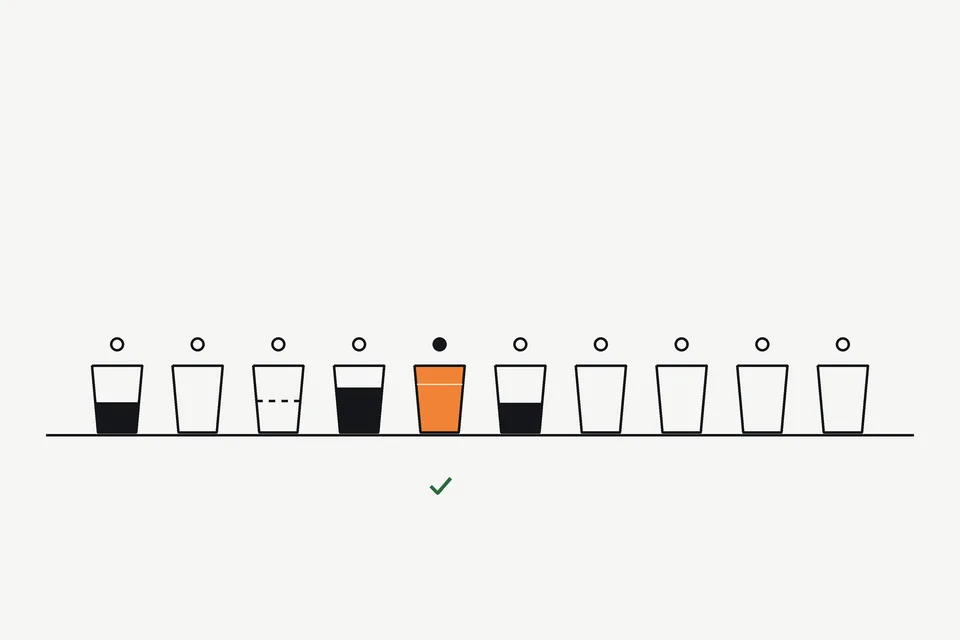
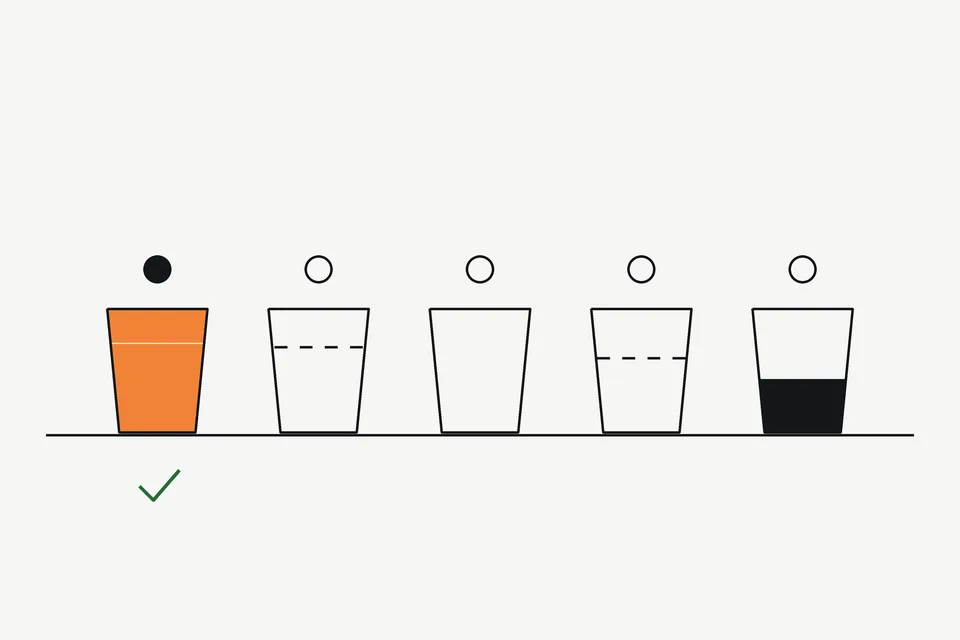
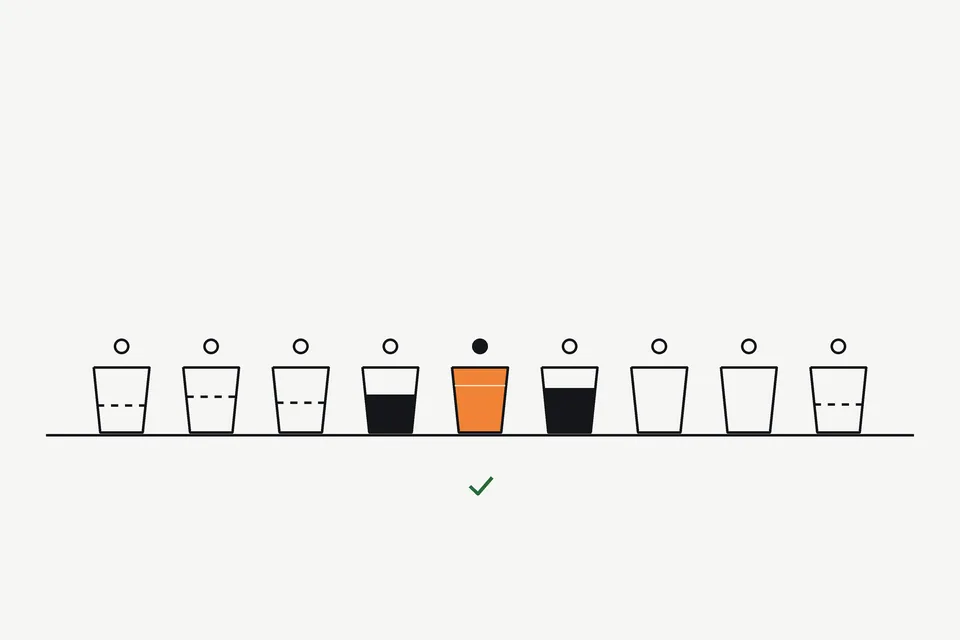
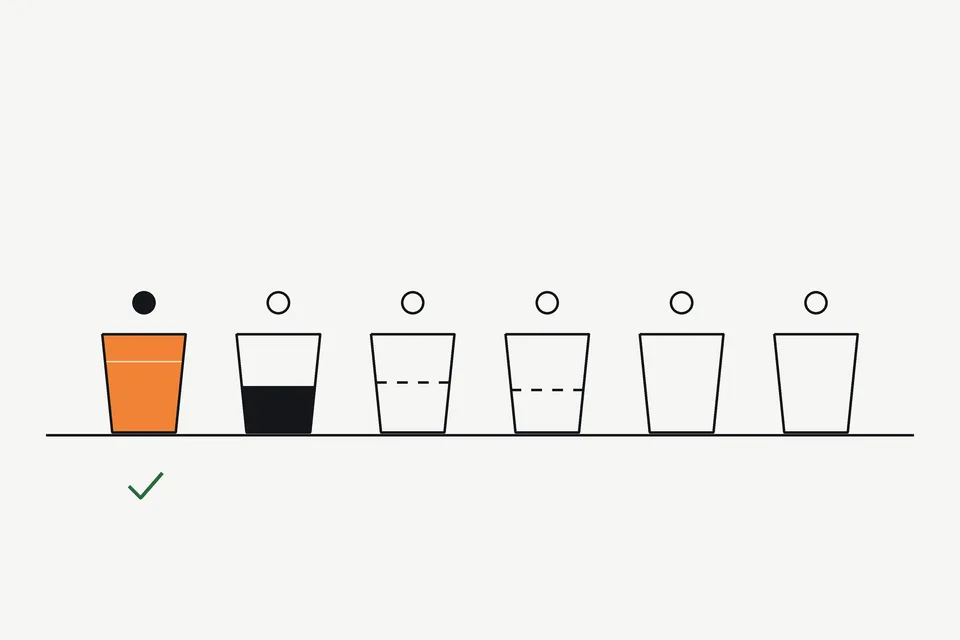
Each detector read all six outputs from each tool. A filled disc is an output read as human.
Which should you choose?
Choose WriteHuman if
- Your pieces run 400 to 600 words and arrive in a predictable number each month, under 80.
- You want two drafts to choose between on every request, read 9 November 2026.
- You want a free allowance that renews, and you accept that it runs on a different model from the paid tiers.
Choose GPTHuman if
- You rewrite short paragraphs often and do not want each one to cost a full request.
- 25,000 words a month in pieces under 1,000 words fits your work, and $99.00 for a year is acceptable for the $8.25 rate, read 9 November 2026.
- You can confirm at checkout whether the dollar sign means US or Canadian dollars.
Questions about WriteHuman AI and GPTHuman
Which has the higher word limit, WriteHuman or GPTHuman?
GPTHuman: 1,000 words per output on Starter against 600 per request on WriteHuman Basic, read on 9 November 2026; at the top of each ladder WriteHuman Ultra allows 3,000 and GPTHuman Unlimited 2,500.
Is WriteHuman or GPTHuman cheaper?
GPTHuman on both billing terms: Starter is $15.00 monthly or $8.25 a month billed $99.00 yearly, against WriteHuman Basic at $20 monthly or $12 a month billed $144 yearly, read on 9 November 2026; the plans meter different things, so the price buys different amounts.
Do WriteHuman and GPTHuman have free plans?
WriteHuman has a standing free plan of 3 requests a month at 250 words each on its Basic quality model, and GPTHuman has a one-off trial of 300 words of output, both read on 9 November 2026.
What is the difference between requests and words as a limit?
A request limit spends one unit however short the text, so WriteHuman's 80 requests at up to 600 words are a ceiling of 48,000 words a month that only full requests reach; a word limit such as GPTHuman's 25,000 counts every word of output and nothing else.
Which one has modes or output options?
Neither names rewrite strengths: WriteHuman offers Basic and Enhanced quality tiers and 2 to 5 output variations per request by plan, and GPTHuman names no modes and describes a paid-plan layer called Shield Guard, both read on 9 November 2026.
Sources
Related reading
 Clever AI Humanizer vs Grammarly AI HumanizerClever AI Humanizer vs Grammarly AI Humanizer on the same fields: a 3,000-word free request against a free.
 BypassGPT vs HIX BypassBypassGPT vs HIX Bypass on the same fields: an 80-word free input against a 3,000-word paid one, a price that.
 WriteHuman AI reviewWriteHuman AI reviewed on the same fields as every humanizer we list: 3 free requests a month, Basic at $12 a.
 GPTHuman reviewGPTHuman reviewed on the same fields as every humanizer we list: the 300-word free trial, Starter at $15 a.